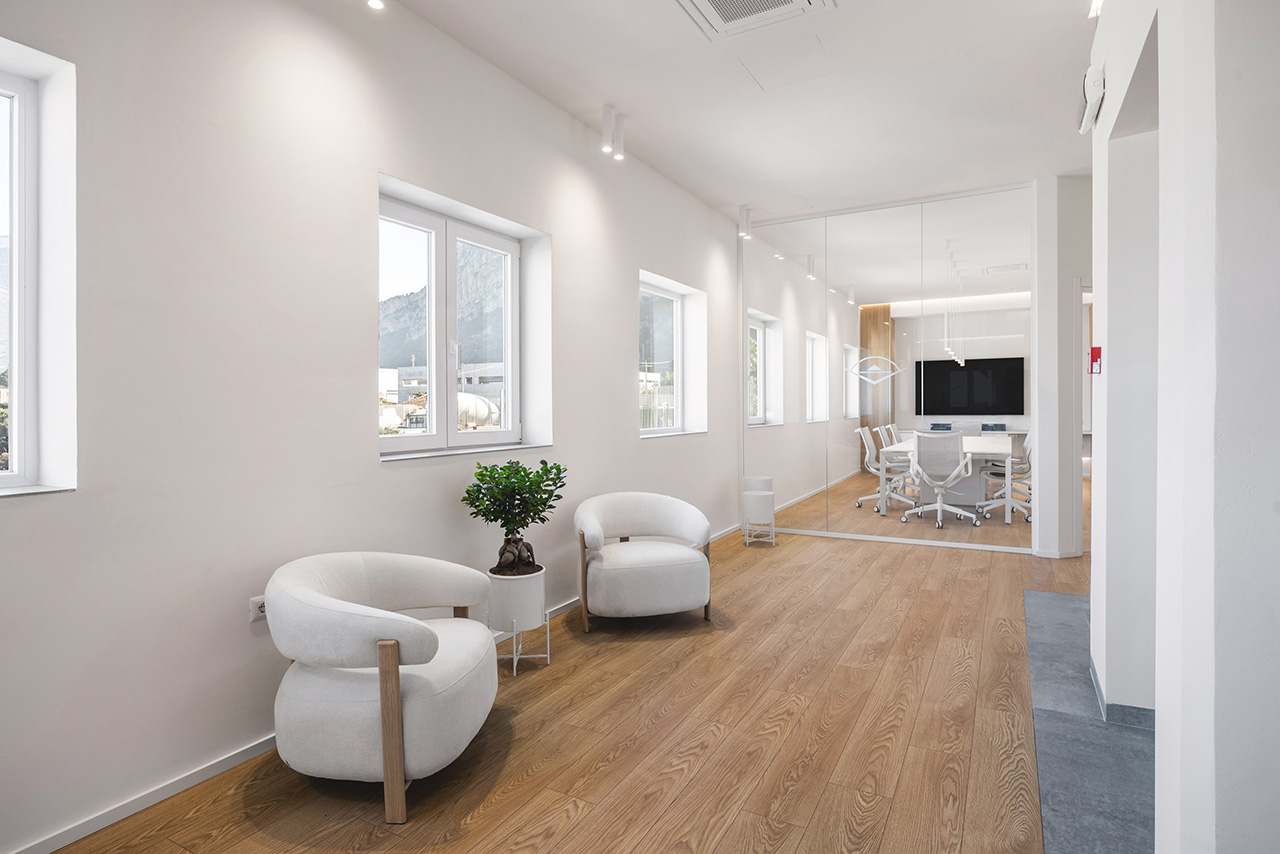
Designer Alberto Di Martino discusses the workplace project at Cantieri Renier in Carini

There is a subtle yet recognizable thread running through Alberto Di Martino’s work: the belief that the workplace is not a neutral backdrop to productive activity, but one of its fundamental components. An interior designer with long experience in the furniture sector, Di Martino creates environments that do more than simply respond to a functional brief—they interpret it, giving people a coherent perception of the identity of the organization in which they operate. His research lies at the intersection of ergonomics, materiality, and narrative: every choice, from spatial layout to material selection, is designed to produce a precise effect on the perceptual quality of the environment, without ever slipping into mere decoration. It is within this framework that the recent project for Cantieri Renier in Carini—an important player in the high-end nautical manufacturing sector—takes shape.

The project began when the building was still in the design phase. How does the method change when interior design and architecture develop simultaneously?
Developing interior design and architecture simultaneously makes it possible to tailor the space around the user, avoiding forced adaptations to structures conceived for other functions. You achieve complete coherence between envelope and content thanks to synergy with the structural engineer and the construction management team. There is negotiation around the distribution of systems: integrating them from the outset encourages you to see constraints as design opportunities. This approach allows the optimization of workflows in a complex construction environment such as the building of an industrial facility and ensures a result in which every centimeter responds to a precise operational logic.
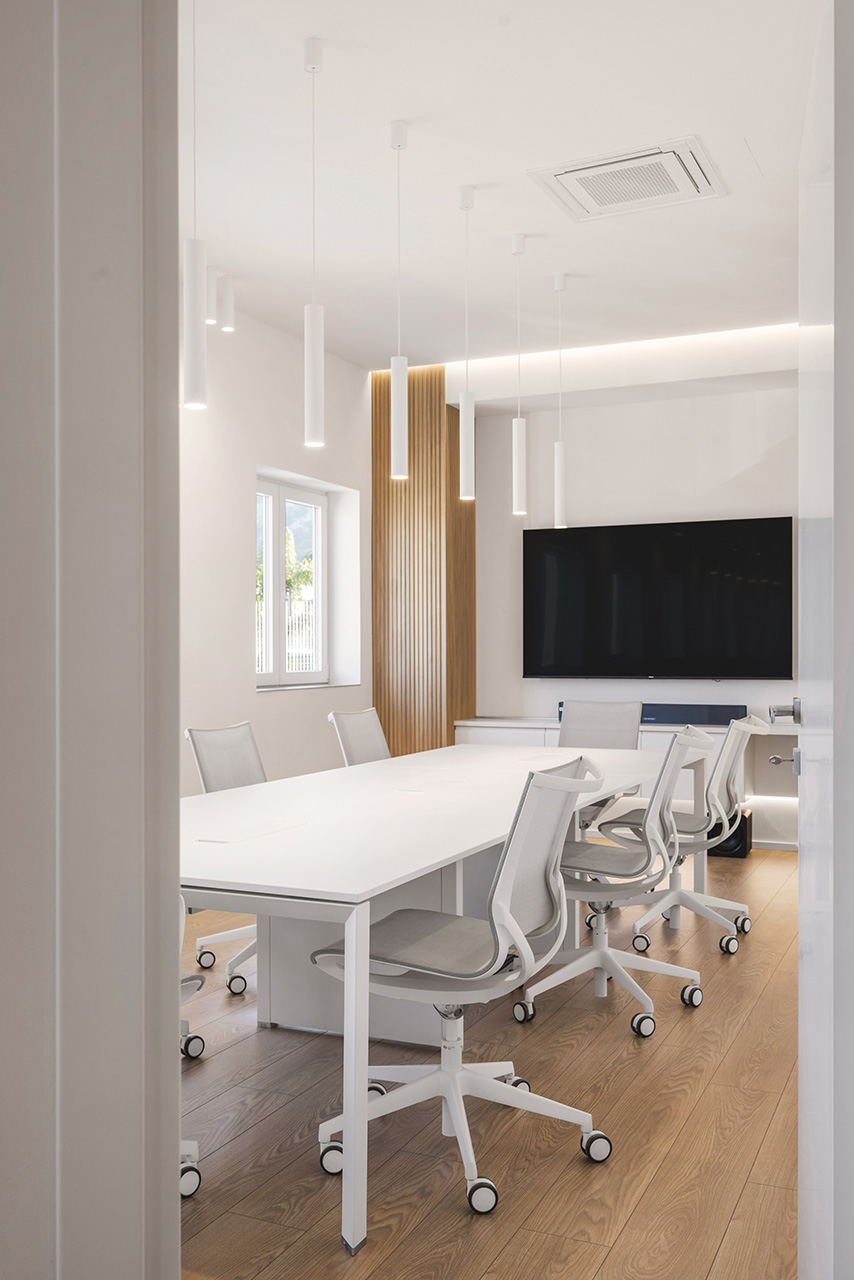
Here transparency is a design tool, not an aesthetic choice. Where does the boundary lie between openness and functional separation?
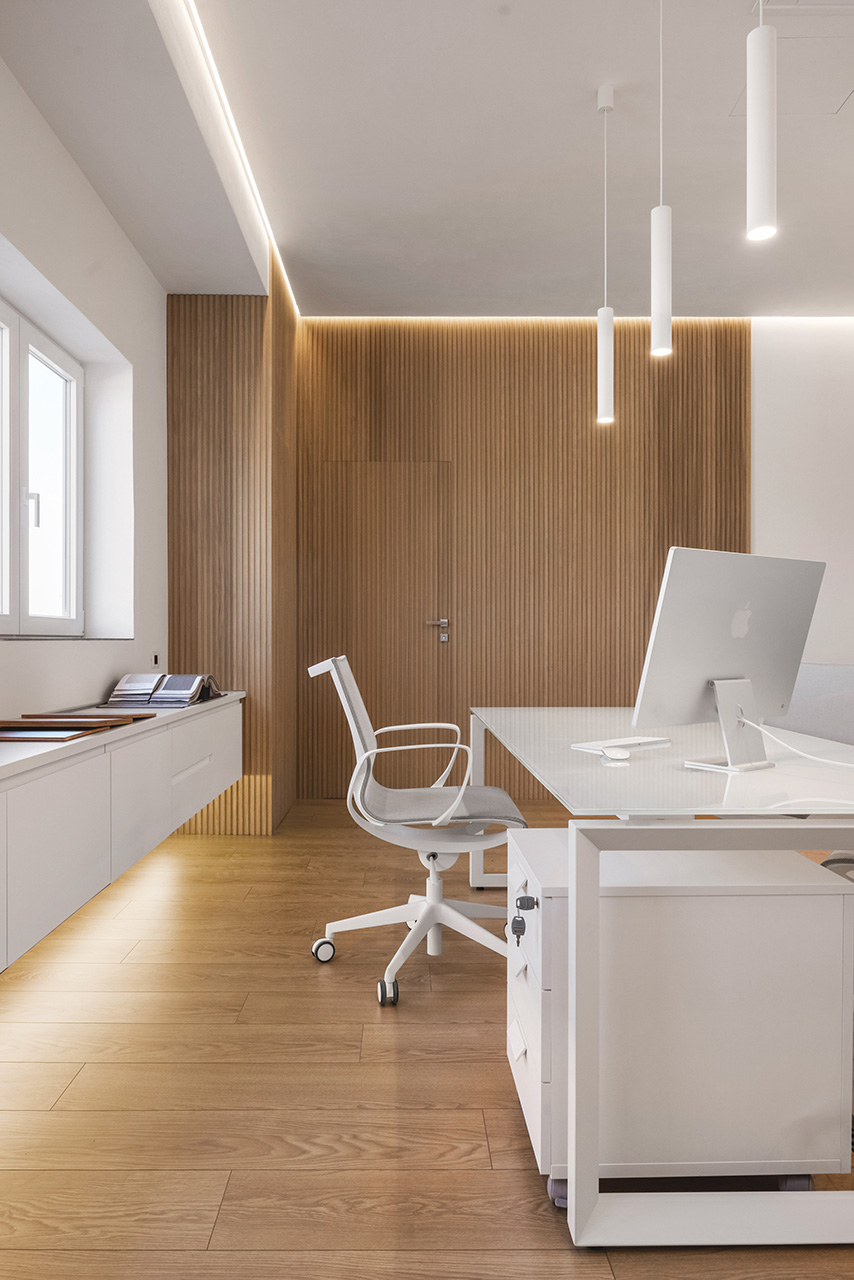
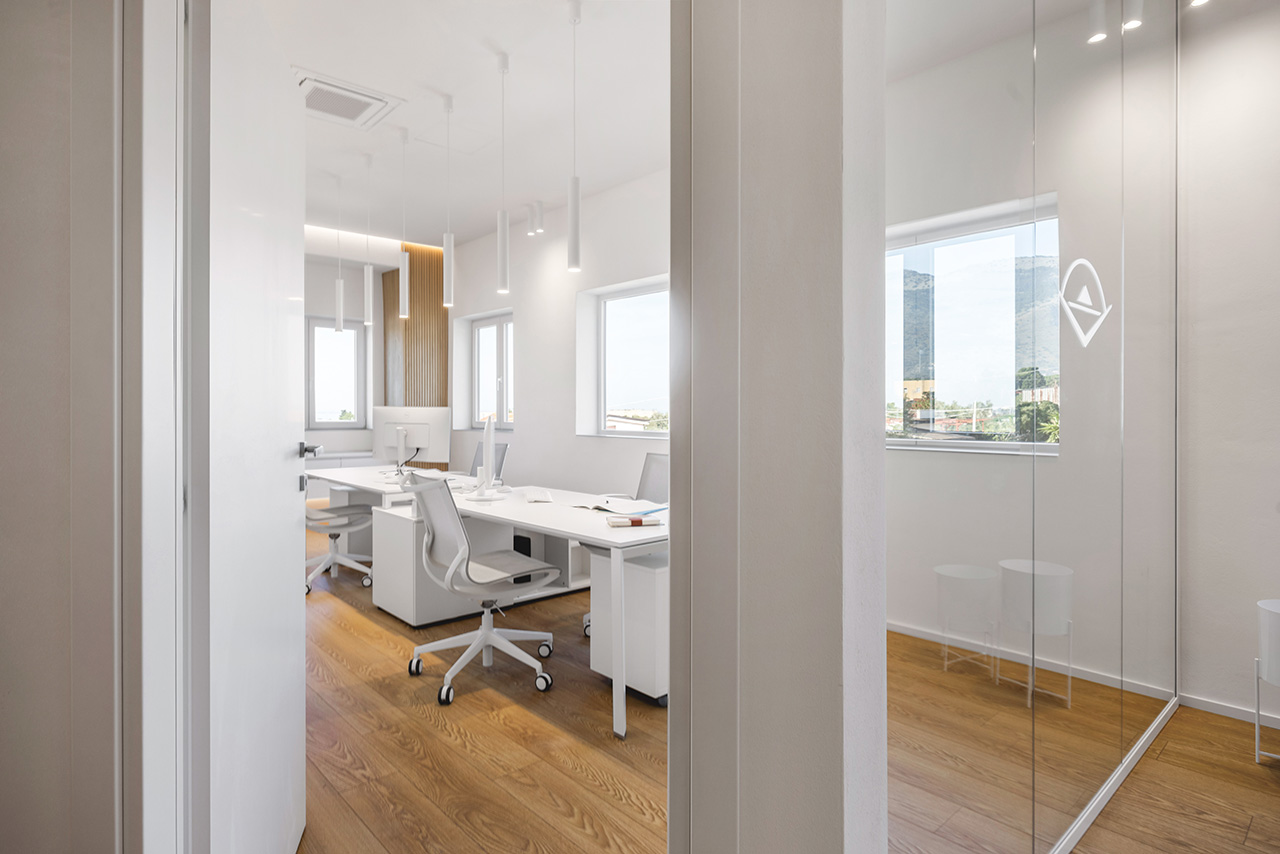
I generally prefer the golden ratio to symmetry, but here I used symmetry to introduce rigor, applying the proportions of the golden rule within the interiors. Transparency conveys authority, while the layout protects the privacy of executive and relaxation areas. To manage visual continuity, I aligned volumes and lighting: the meeting table and the operational workstations have the same footprint and identical finishes. The boundary is fluid: visitors perceive the operational life of the shipyard and the design areas, yet the flows remain distinct and orderly thanks to the technical use of monolithic glass partitions.
For the flooring you chose Prestige Gold Hydro by Skema. What made this product the right solution compared to alternatives on the market?
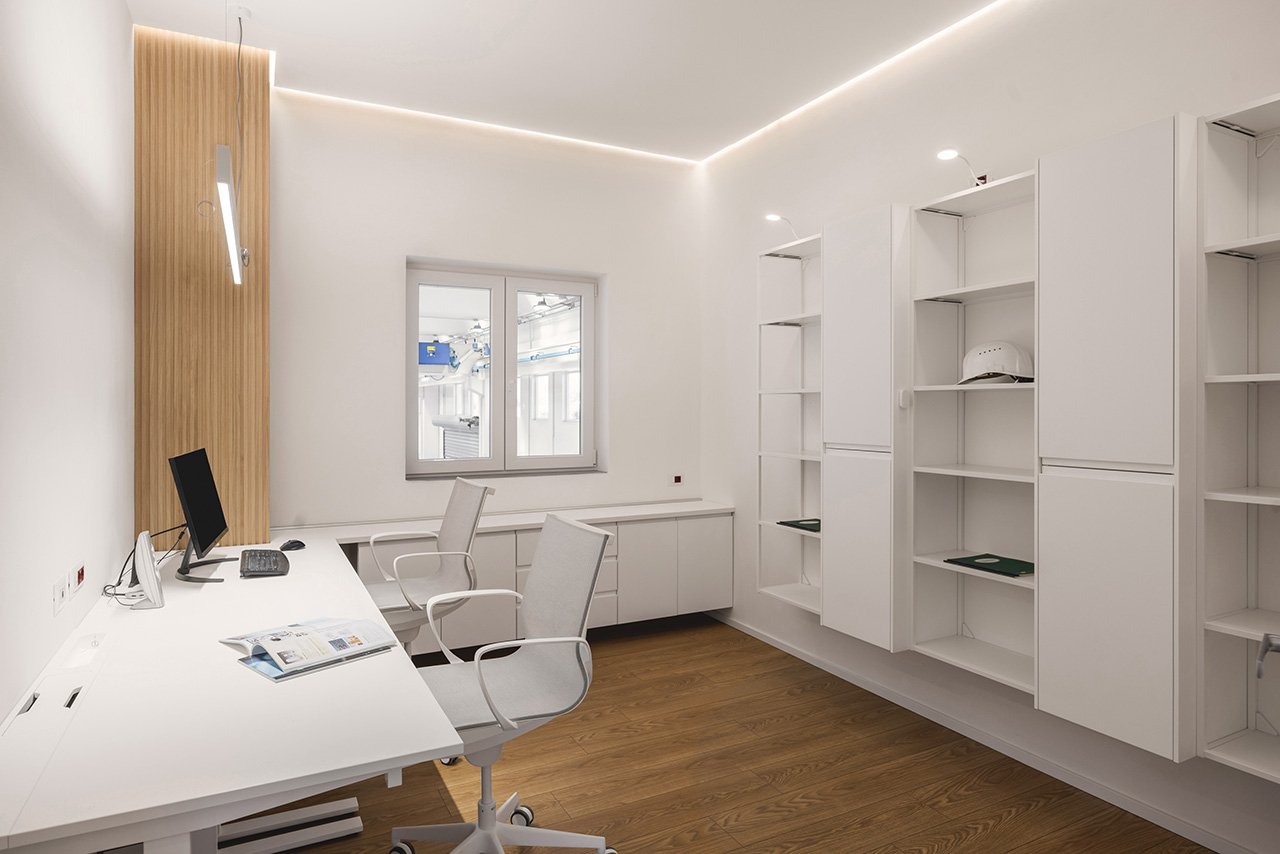
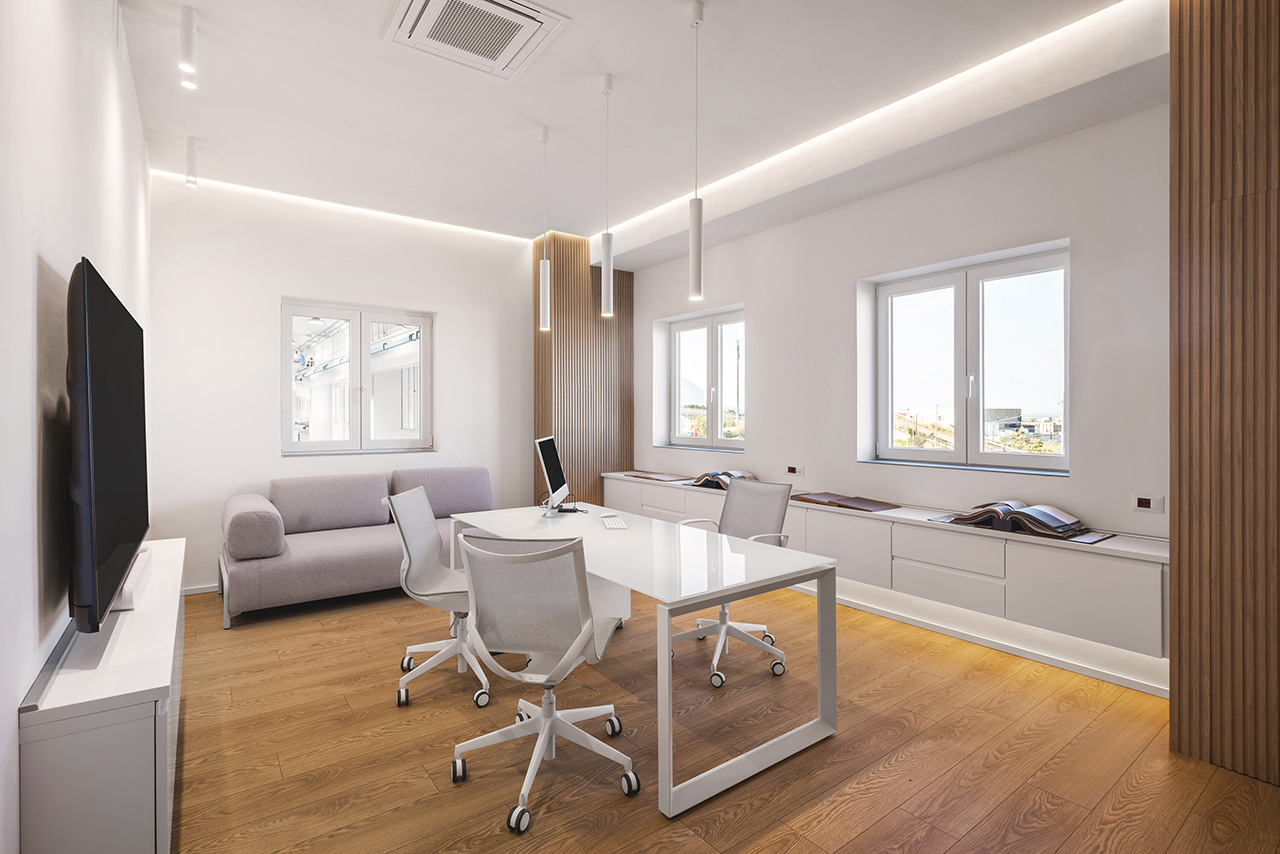
This solution was a strategic choice to introduce materiality and warmth into an environment dominated by matte white, while keeping the budget balanced. Compared to parquet, it offers high resistance and minimal maintenance; compared to wood-effect porcelain stoneware—which I often find lacking in authenticity and rather cold—it provides a more natural tactile and visual feedback. In this project it was essential to guarantee water resistance and stability, features that the client explicitly required for an intensive working environment. The Prestige Gold Hydro flooring therefore allows the combination of aesthetics and technical performance, maintaining a reliable surface even in an operational context such as that of Cantieri Renier.
What was the organizing principle that guided the individual spatial and material choices?
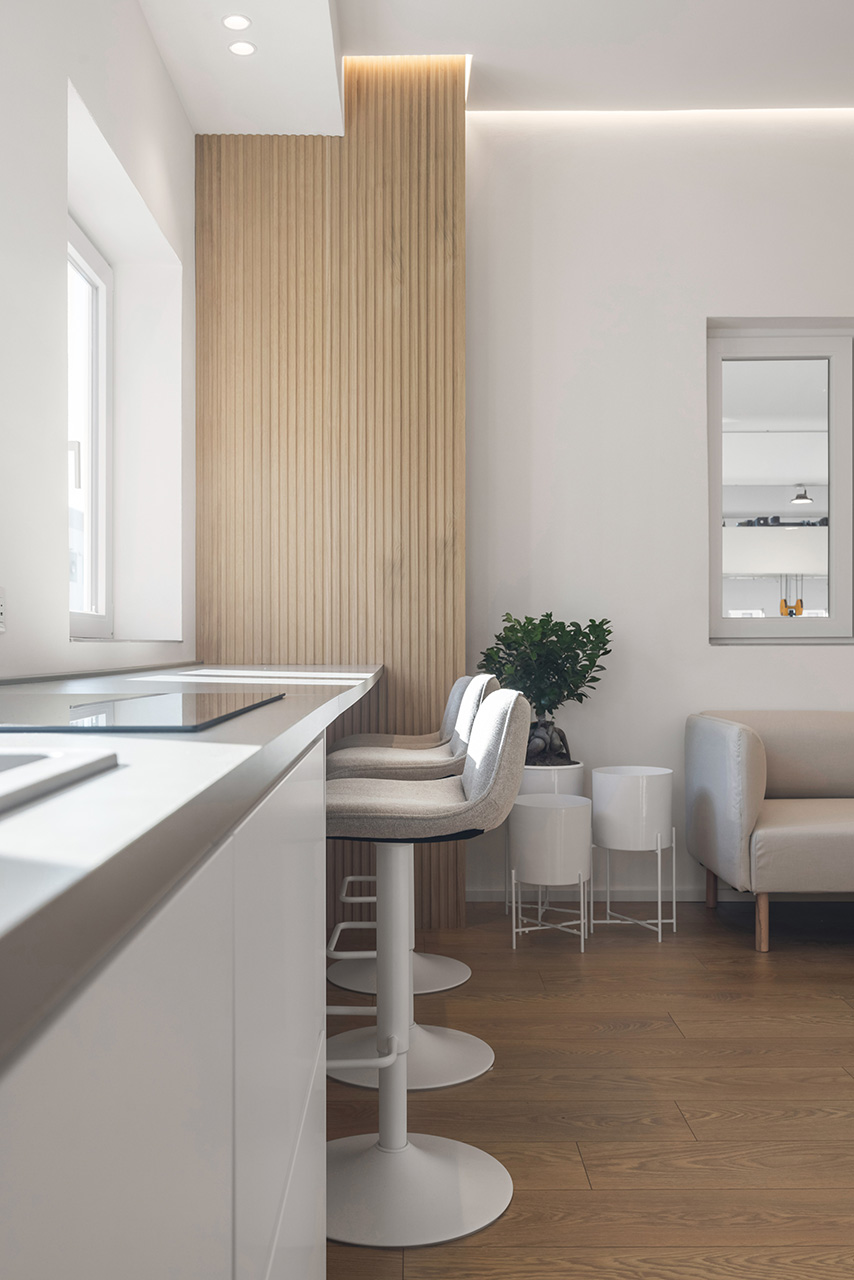
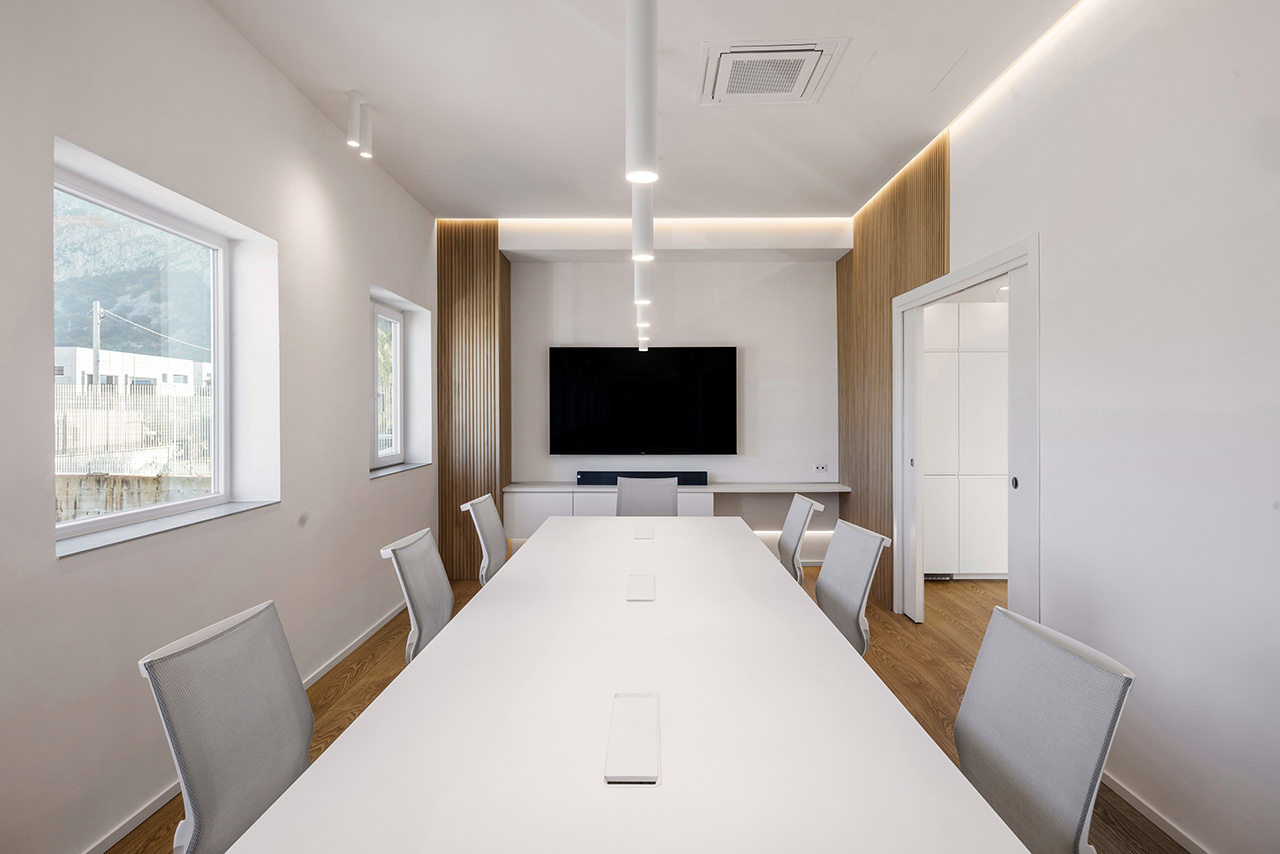
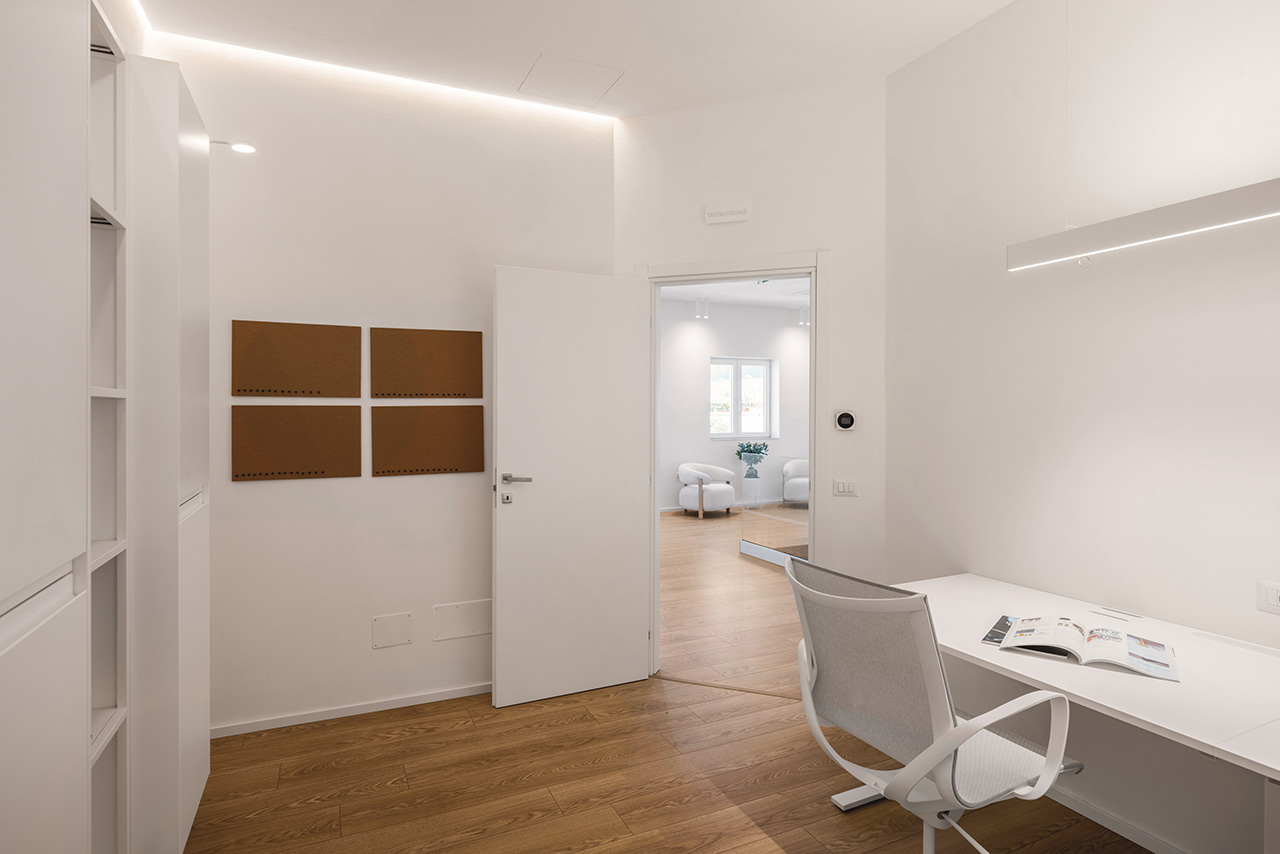
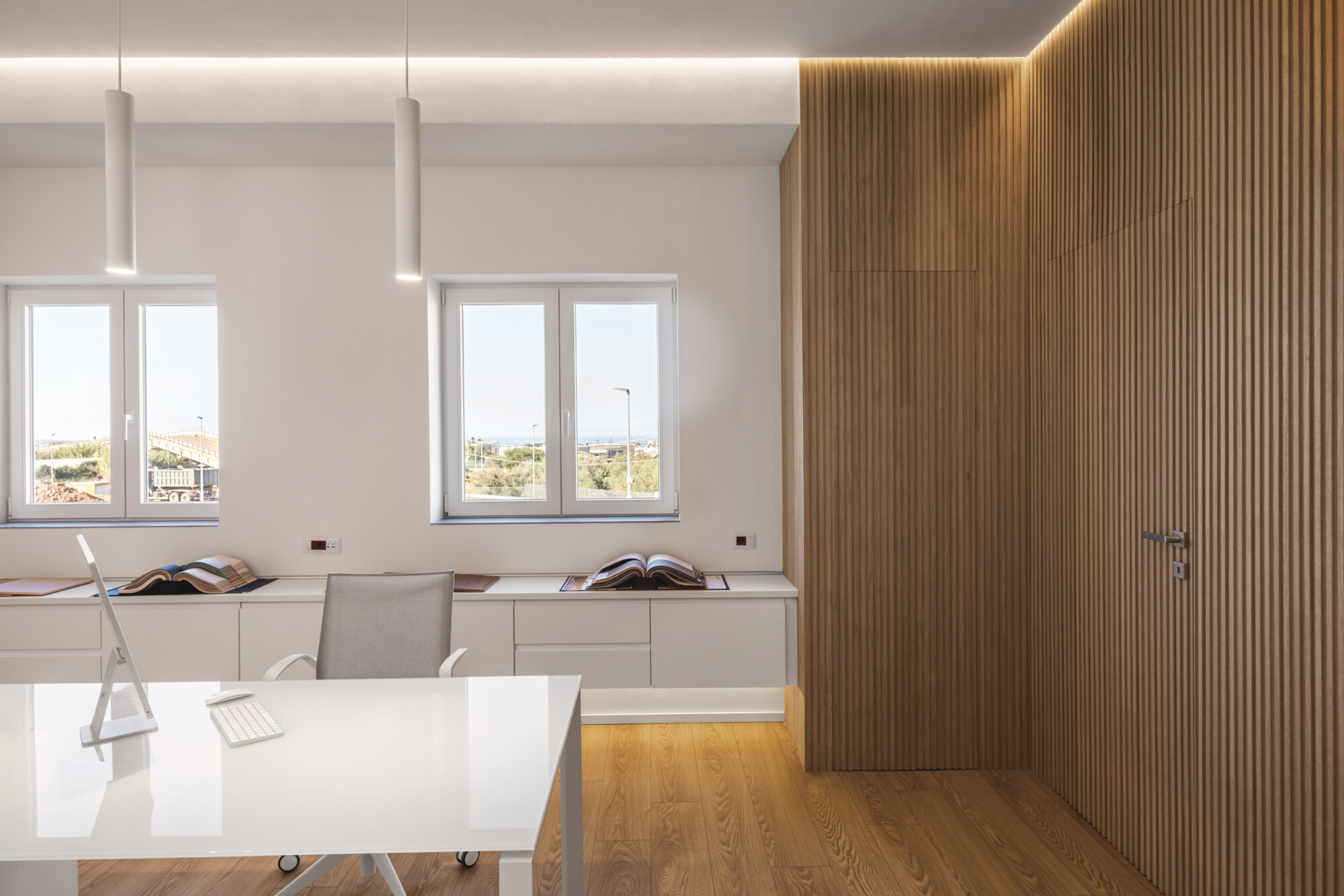
I related Skema’s Prestige Gold Hydro flooring, in the Rovere Sole color, with paneling in real veneered oak, seeking a precise chromatic correspondence between materials that differ in nature and behavior. The wood follows a functional hierarchy: more present in representative areas, more essential in technical ones. The organizing principle is, once again, the golden rule: the boards cover exactly one third of the vertical surfaces on which they are installed. This continuity between floor and walls creates a readable and coherent architectural box, where the natural oak texture softens the technical rigor of the environment and guides the eye through the different zones of the floor. One technical detail: I inserted expansion joints by modifying the profiles of the partition walls and at door thresholds, keeping the floating floor visually uninterrupted, avoiding unsightly breaks, and completing everything with a minimal white skirting board.
How important is it today to conceive workspaces as adaptable systems, capable of accommodating future transformations without losing design coherence?
A contemporary project must be an evolving system, capable of accommodating change without betraying the original idea. With Skema’s technical flooring, I was able to guarantee durability and ease of restoration, ensuring a surface ready to support possible future changes of use over time. My method places strategic analysis above all else: I listen to the client’s real needs in order to provide concrete solutions. I do not choose furniture or materials to follow a signature style or a brand; I select only what the project truly requires, in strict respect of the budget and the client’s needs. Space must be a working tool that functions effectively, capable of adapting to new operational requirements without losing coherence.